Thursday, December 6, 2018

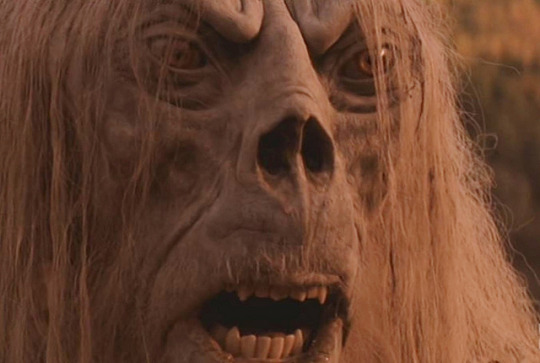
Creature: Caver

Caver


SIZE/TYPE: Medium monstrous humanoid
HIT DICE: 3D10+6 (22 hp)
INITIATIVE: +8
SPEED: 40 ft., climb 30 ft.
AC: 15, touch 14, flat-footed 11 (+4 Dex, +1 natural)
ATTACKS: Melee club +5 (1d6+2), bite +0 (1d4+1)
DAMAGE: Club 1d6+2, bite 1d4+1
FACE/REACH: 5ft by 5ft/5ft
SPECIAL ATTACKS: Leap (Ex), sneak attack (+1d6), swarming (Ex)
SPECIAL QUALITIES: Darkvision 120 ft. (Ex), scent (Ex); immune to disease, poison; expert climber; light blindness
SAVES: Fort +3, Ref +9, Will +5
ABILITIES: Str 14, Dex 19, Con 15, Int 5, Wis 14, Cha 6
SKILLS: Acrobatics +13, Climb +22, Stealth +8 (+12 in caverns); Racial Modifiers +4 Stealth in caverns, +8 Acrobatics, +16 Climb
FEATS: Improved Initiative, Lightning Reflexes
LANGUAGES: Terran
CLIMATE/TERRAIN: Any Underground
CHALLENGE RATING: 2
TREASURE: Standard
ALIGNMENT: Often Chaotic Evil
ADVANCEMENT: –
SPECIAL ABILITIES
Expert Climber (Ex)
A caver can cling to cave walls and even ceilings as long as the surface has hand- and footholds. In effect, a caver is treated as constantly being under a nonmagical version of the spell spider climb, save that it cannot cling to smooth surfaces. This ability doubles the normal +8 racial bonus to Climb checks normally afforded creatures with a climb speed to a +16 racial bonus.
Leap Attack (Ex)
As a standard action, a caver may make a single attack during a jump. It can make this attack at any point along the course of the leap—the start, the end, or while in mid-air. While jumping, a caver does not provoke attacks of opportunity for leaving a threatened square.
Swarming (Ex)
Cavers dwell and fight in cramped quarters every day of their lives, and as such are quite adept at swarming foes. Up to two cavers can share the same square at the same time. If two cavers in the same square attack the same foe, they are considered to be flanking that foe as if they were in two opposite squares.
Degenerate humans long lost from the world of light, cavers have regressed through years of subterranean dwelling into ravenous, barely thinking beasts of the endless night. They no longer remember the civilized lives their ancestors led, although many caver tribes still dwell in the shattered ruins of their ancient homes. Ironically, in many cases cavers worship the statues left behind by these ancestors as their gods. A typical caver stands just over 5 feet tall and weighs roughly 150 pounds. When discovered, cavers can be solitary, a pair, aband (3–6), or a tribe (7–18)
Cavers move about on two legs at times, but often drop down to a creepy four-limbed shuffle when speed or stealth is necessary. Their wiry, often emaciated frames mask the strength of their limbs and their swift reactions.
Cavers typically give birth to broods of three to four babies at a time, ravenous creatures born with a full set of teeth and a cannibalistic predisposition. The first few weeks of a brood’s life must be carefully mothered to prevent attrition—it usually takes that long for the caver young to overcome their natural inclination to feed on whatever is closest. Cavers mature quickly, achieving adulthood after only 5 years of life. A typical caver can live to a ripe old age of 60, although the majority of their kind die far sooner than that due to violence.
(Yes, shamelessly stolen from Morlocks) 

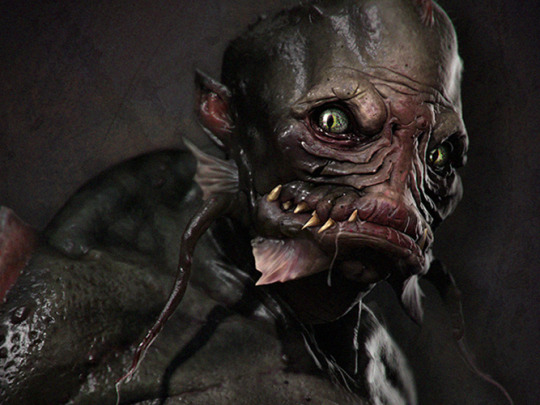
Creature: Fishermen

Fishermen


Size/Type: Medium Monstrous Humanoid (Aquatic)
Hit Dice: 2d8+2 (11 hp)
Initiative: +0
Speed: 20 ft., swim 50 ft.
AC: 16 (+6 Natural), touch 10, flatfooted 16
Attacks: Bite +3 Melee or hand weapon +3 melee
Damage: Bite 1d4+1 or hand weapon +1
Face/Reach: 5ft. by 5ft. / 5ft.
Special Qualities: Keen Sight (Ex), Slippery (Ex), Adhesive (Ex), Light Blindness (Ex), Amphibious (Ex), Immunity: Paralysis (Ex), Immunity: Poison (Ex), Resistance: Electricity (Ex): 10
Saves: Fort +1, Ref +3, Will +5
Abilities: Str 13, Dex 10, Con 13, Int 13, Wis 14, Cha 8
Skills: Escape Artist +8, Listen +4, Search +5, Spot +8
Feats: Alertness, Simple Weapon Proficiency
Languages: Aquan, sometimes Trade
Climate/Terrain: Temperate Aquatic
Challenge Rating: 2
Treasure: Coins: Standard , Goods: Standard , Items: Standard
Alignment: Often Neutral Evil
Advancement: 0-2 HD (Medium)
An average fisherman stands roughly 5 feet tall and has a more or less humanoid appearance. Its rounded body is covered with fine scales giving it the appearance of being pudgy or bloated. The arms and legs are slender, almost willowy, ending in broad hands and distended feet that look very much like flippers. The bullet-shaped heads are piscine, with bulging, silver-black eyes and wide mouths full of needle-sharp teeth. Although fishermen are generally a silver-green color, their pigmentation changes with their mood. An angry fisherman is dark red, while a frightened one becomes pale gray or even white. The air around a fisherman carries the almost overwhelming odor of rotting fish.
Fishermen speak Aquan.
COMBAT
Fisherman tactics and weapons vary greatly depending upon the training and skills of the individual encountered. A group of fishermen warriors usually fight in formation, throwing their spears before closing to melee range. While intelligent, they dislike technology immensely and refuse to use it.
Keen Sight (Ex): Fishermen have excellent vision thanks to their two independently focusing eyes. Their eyesight is so keen that they can spot a moving object or creature even if it is invisible or camouflaged. Only by remaining perfectly still can such objects or creatures avoid their notice.
Slippery (Ex): All fishermen secrete an oily film that makes them difficult to grapple or snare. Webs don’t affect fishermen and they usually can wriggle free from most other forms of confinement.
Adhesive (Ex): Fishermen use their own body oil and other materials to give their shields a finish almost like flypaper, holding fast any creatures or items touching them. Anyone who makes an unsuccessful melee attack against a fisherman must succeed at a Reflex save (DC 14), or the attacker’s weapon sticks to the shield and is yanked out of the wielder’s grip. Creatures using natural weapons are automatically grappled if they get stuck.
Immunities (Ex): Fishermen are immune to poison and paralysis. The various hold mutations also have no effect on them, and their keen sight automatically detects figments for what they are.
Light Blindness (Ex): Abrupt exposure to bright light (such as sunlight or a daylight spell) blinds a fisherman for 1 round. In addition, they suffer a -1 circumstance penalty to all attack rolls, saves, and checks while operating in bright light.
Amphibious (Ex): Although fishermen breathe by means of gills, they can survive indefinitely on land.
Skills: Fishermen receive a +15 racial bonus to Escape Artist checks and a +4 racial bonus to Spot and Search checks.
(Yes, shamelessly stolen from Kuo-toa) 

Flavor: The Cubes

The Cubes


One of the mysteries of the Ancients are the Cubes. These strange metal cubes are a complete and total enigma to anyone that attempts to figure them out. At least a dozen Cubes are known to exist, but their true number is a mystery.
Made of an unknown, dusty black metal, the Cubes are precisely 1m on a side. They silently float about (at a height of between .5m and 2m and at a speed of 10) with absolutely no rhyme or reason. They are completely impervious to all known weapons, can not be shoved or moved in any way and mental mutations actually view them as a complete void, neither reflecting or absorbing attacks or other abilities. Mechanical life of any sort (including androids and those with optical cybernetics) are unable to detect them as well.
Once every 14 days, at precisely 22:00 hours, the Cubes go completely motionless wherever they are and shine brightly for exactly 1 hour. After this hour the Cubes return to their unlit state and resume floating. The reason behind this, like all other aspects of the Cubes, is unknown.

Rules: Unusual Gamma Terra Diseases

Unusual Gamma Terra Diseases
NAME: Birdbone (Ex)
INFECTION DC: 20
INCUBATION: 1d4 days then 1 week
DAMAGE: Weakness in joints, persistent but mild fever, weak bones 
This disease, which is caused by contact with avian detritus, is difficult to catch. This is a benefit, because the disease causes permanent debilitation.
1d4 days after contact, the sufferer begins to feel weak in the joints and develops a low grade fever. If the disease isn’t cured in this time, it causes a permanent 1d6 Dex damage. At this time his bones become fairly brittle and will break easily.

If the user takes more than 10 points of damage from any source, a bone is broken in the hit location (except for the spine, which is oddly immune). A broken arm results in a -4 penalty when attacking or performing any action involving a skill or ability score based check. Shields cannot be used with a broken arm effectively and only provide half their bonus when fighting defensively or using total defense (otherwise they provide no bonus at all). A leg reduces movement by 10′ and prevents any faster land-based movement. Broken ribs cause a temporary loss of 1d4 Con. A cracked skull results in the temporary loss of 1 Int point. Without advanced medical assistance or mutational healing, a broken limb will take 3d4+2 weeks to heal.
NAME: Filth Sickness (Ex)
INFECTION DC: 12
INCUBATION: 1d3 days
DAMAGE: Cough, nausea, weakness in legs and back, fever
Fairly common, Filth Sickness comes from wounds brought about by accident or injury. The victim must make a FORT save vs DC 12 or in 1d3 days suffer 1d3 Dex and 1d3 Con loss. Once per week the victim may make an additional FORT save and, if successful, gains back one point in either Dex or Con. Failure doesn’t result in any additional loss. The disease is burnt out once all Dex and Con points have been restored.
Name: Furred Hate (Ex)
Infection DC: 20 (Injury)
Incubation: 1-6 days
Damage: See Text

This incredibly odd disease is spread by various blood-thirsty insects such as fleas, ticks and mosquitoes. Anyone infected by it will give off an odor that all non-sapient animals consider incredibly offensive and rage inspiring.

The character suffers an inherent -6 penalty to all Animal Empathy, Handle Animal, and Ride checks, and must always treat those skills as cross-class skills if he wishes to improve them. Any wild animals encountered will have their reactions toward your character shifted one column into the negative, and animals that are already hostile will gleefully ignore anyone else nearby in their haste to hurl themselves upon your character. Lastly, any animal attacking your character gains a +1 morale bonus to its attack and damage rolls.
Furred Hate will burn itself out in roughly six months. However, if the character becomes infected with dysentery the disease is eliminated from the body when the dysentery ends.
NAME: Glow-Eye (Ex)
INFECTION DC: 15
INCUBATION: 1d8 days
DAMAGE: Blindness, minor CON damage
A very strange disease, Glow-Eye first gives and then takes away. 1d8 days after being infected by the virus, the victim will gain the Heightened Sense (Sight) mutation. 1d10 days after that, the victim will then gain the Infravision mutation. 1d10 days later the victim will have the Ultravision mutation and begin to have intense headaches centered around the eyes. 1d10 days after that the victim will permanently lose the ability to see after his eyes swell and explode. This causes 1 permanent point of CON damage and thanks to the blindness he takes a -2 penalty to Armor Class, loses his Dexterity bonus to AC (if any), moves at half speed, and takes a -4 penalty on Search checks and on most Strength- and Dexterity-based skill checks. All checks and activities that rely on vision (such as reading and Spot checks) automatically fail. All opponents are considered to have total concealment (50% miss chance) to the blinded character.
NAME: Lung Rot (Ex)
INFECTION DC: 24 (Inhaled)
INCUBATION: 3 hours
DAMAGE: Whenever under stress (combat, shouting, wounded), the player may cough up blood dealing 1d4 damage (1 on D4).
Lung Rot commonly afflicts to those who frequently inhale poisonous fumes or suffer massive exposure at once. It is exceedingly common in areas the Ancients used chemical weapons.
Like asthma, if breath rate increased too far above normal at the GM’s discretion, the character’s lungs may bleed and force them to cough up a significant quantity of blood. Due to it being more of an internal wound rather than a disease, only powerful technology or mutations can reverse the damage. Otherwise the disease is permanent.
Name: Mutie Flu (Ex)
Infection DC: 22 for all non-mutant players, 12 for all mutant players. (Inhaled or Ingested)
Incubation: 1-5 days for mutant players, 1-2 days for non-mutant players.
Damage: See Text

To an average mutant, the Mutie Flu is no big deal; some sniffles here, and a little nausea there, etc. For anything that’s not a mutant, it’s one hot ass mess. Cramps, diarrhea, vomiting, overall nausea, runny nose, watery eyes and nosebleeds. Don’t be around a sick mutant, because to mutants this flu will only have a -1 on skill checks, but to non-mutants it gives a -2 check on all saves and skill checks.
With relation to this disease, a mutant is any character or NPC that has any mutation with a Mp score (beneficial or detrimental).
NAME: Scritch (Ex)
INFECTION DC: 12 (Injury)
INCUBATION: 1-4 days
DAMAGE: Nauseated or exhausted, possible confused (convulsions)
Scritch is sometimes called Cat Scratch Fever; common among those clawed by feline creatures and causes flu-like symptoms. In serious cases, the afflicted becomes confused and may convulse.
If one fails their check by more than 5 points they become exhausted instead of nauseated and suffers confusion (convulsing instead of the normal percentage of useless activity during confusion).
If one fails their check by more than 10 points they grow a light covering of fur at the point of injury which will grow at a rate of 1cm per day until either the disease is cured or the character is completely covered in fur (at which point they are considered to have the Body Change mutation but do not gain the bonus Mp from it). If the disease is cured the fur simply falls out.
NAME: Skinner (Ex)
INFECTION DC: 16 (Contact)
INCUBATION: 1-4 days
DAMAGE: 1D6 Permanent Con and Str
Considered to be one of the most deadly diseases on Gamma Terra, most persons that come down with Skinner prefer to commit suicide rather than endure its torment. The disease is caused by an unknown virus that some say is a curse placed by the Ancients on their long dead foes. Still others say it comes from the stars and is sapient.
When stricken with Skinner, the victim’s skin will bulge and the bulge will move around slowly and painfully, seemingly of its own accord. After 1d4 days the movement will stop, the bulge will harden and burst in what could only be described as the skin and muscle itself excruciatingly ripping away and jumping off of the victim in a bloody, puss-filled spray. 2cm of skin and muscle will be lost per point of Con lost in this way.
Once per day afterward, he must make a successful Fortitude saving throw to avoid repeated damage. Two successful saving throws in a row indicate that he has fought off the disease and recovers, taking no more damage. Every failed save results in an additional 1d6 Con/Str and flesh loss.
The disease is especially virulent in that anyone that comes in contact with the bodily fluids of the victim, especially when the bulge bursts, must make a save to avoid catching the disease.
Name: Tec-less (Ex)
Infection DC: 14 (Contact)
Incubation: 1-4 days
Damage: See Text
Tec-less is one of the strangest diseases to appear in Gamma Terra. It does no actual damage to the victim of the disease, instead taking away their ability to use any type of technology.
After 1d4 days and a mild fever, the victim simply forgets how technology works. He will still know, for example, what a pistol is and what it does, but if given one will fidget with it and look it over, unable to make it work. Even if shown again and again how to use the pistol, it will simply not work for them except for random accident (such as accidentally squeezing the trigger).
This translates to a -15 on all skill rolls involving any technology more advanced than the Middle Ages, including anything involving gunpowder. He also loses access to any feats that involve technology as well.
After 2d6 days the infection simply disappears, and the victim automatically regains all feats and no longer has his skill penalty.

Rules: Common Gamma Terra Diseases

Common Gamma Terra Diseases
Name: Blackwater Fever (Ex)
Infection DC: See Desc
Incubation: 1-6 days
Damage: Nauseated, fatigued or ability damage, possible secondary ability damage or unconsciousness, possible death (1 week)
Blackwater fever is a complication of malaria caused by bleeding into the abdomen. It causes flu-like symptoms, jaundice, vomiting, severe anemia, and red or black urine (hence the name). Death is usually imminent with blackwater fever, as it is difficult to treat and and occur within 1 week of catching malaria.
If a character rolls a natural one on a Fortitude save to avoid catching malaria, s/he contracts Blackwater fever instead, and is considered nauseated and fatigued.
If the PC fails their check by more than 5 points, s/he takes 2d4 Con and 1d6 Str damage instead of becoming nauseated and fatigued.
If the PC fails their check by more than 10 points, s/he takes ability damage of 2d4 Con and 1d6 Str, plus the initial 2d4 Con and 1d6 Str.
If the PC rolls a natural one, s/he falls into a coma (unconsciousness) and must be healed within one day or die.
Name: Botulism (Ex)
Infection DC: 16 (Ingested, Injury)
Incubation: 1-2 days
Damage: Nauseated or confused, possibly dazzled or paralyzed/ability damage, possible death (2 weeks)
Botulism is technically a illness-causing poison, but it masquerades as a disease (appearing to be a bad version of dysentery) because it is present in contaminated food and water. Botulism can also be transferred through a wound but the concentration must be large (50% chance of infection with any weapon smeared with poison unless it is coated twice). It can be injected directly into the body or caused by immersing the body in contaminated liquid (provided there are large wounds).
Botulism causes dry mouth, blurred vision, drooping eyelids, slurred speech and vomiting (as if one is drunk but is not). It can also cause incontinence, diarrhea, paralysis of muscles and death from respiratory failure. The poison makes it impossible to breathe by affecting the chest muscles.
If the PC fails their check by more than 5 points, s/he is confused instead of nauseated (using regular confusion rules), and becomes dazzled.
If the PC fails their check by more than 10 points, s/he may be paralyzed. Roll 1d6 to determine extent of paralysis: 1 - Minor, takes 1d2 Dex damage; 2 - Mild, takes 1d4 Dex damage; 3 - Average, takes 1d6 Dex damage; 4 - Great, takes 1d10 Dex damage; 5 - Greater, takes 1d12 Dex damage; or 6 - Maximum, complete paralysis of upper chest and throat, and arms. The PC may survive the poison, even at the maximum level, if s/he makes another Fortitude save DC 16 to halve the ability damage. A successful save takes paralysis to Greater instead of Maximum.
Name: Cholera (Ex)
Infection DC: 18 (Ingested)
Incubation: 1 day
Damage: Fatigued, shaken, possibly prone or death (within 5 days)
Cholera causes massive dehydration which impairs the body’s ability to function. It is caused by fecal matter in food or water, and is common in areas that are constrained due to circumstance (ships, jails, other isolated areas) or crowded areas with one water source. When using cholera in an adventure, the PC makes a Fortitude save of DC 18 or becomes fatigued and shaken. If said PC fails by more than 5 points, s/he is rendered prone and helpless; failure by more than 10 points results in death.
Name: Coronavirus (Ex)
Infection DC: 20 (Inhalation, Contact)
Incubation: 2-8 days
Damage: Cough, fever, shortness of breath, loss of smell and/or taste, ability damage
A coronavirus can be severe, and has caused millions of deaths around the world as well as lasting health problems in some who have survived the illness. Symptoms mimic the flu and in many cases is it fatal. The immunocompromised, elderly and very young are more likely to have a severe response to the virus.
Initial damage is 1 Dex and 1 Con. The next day the victim takes secondary damage of 1d2 Dex and 1d2 Con, and if  damage is sustained, make a second saving throw to avoid 1d2 points being permanently drained (instead of just damaged).
Name: Dysentery (Ex)
Infection DC: 10 (Ingested)
Incubation: 1-4 weeks
Damage: Sickened or nauseated, nonfatal
Dysentery was known by the lovely name of bloody flux (or simply flux) during the Middle Ages, and was a stomach and intestinal disease caused by contaminated food and water. Usually flux was an ongoing process as many villagers ate and drank the same foods, but a temporary illness could be caused by lodging in a “bad” area for a few weeks.
The usual symptoms of flux were diarrhea (occasionally with blood and mucus), and occasional vomiting.
If the PC fails the check by more than 5 points, s/he becomes nauseated instead of sickened.
Name: Malaria (Ex)
Infection DC: 20 (Injury)
Incubation: 1d6 days
Duration: Permanent until cured
Damage: Nauseated or confusion, possible ability damage or unconsciousness, possible Blackwater fever, possible death (2 weeks)
Malaria is, of course, a notorious disease caused by mosquitos who transfer it through blood-sucking. It has been known as ague, “bad air” (mala aria from which it gets the name), and marsh fever. Malaria is likely to occur in swampy areas where mosquitos thrive.
Malaria causes fever, shivers, vomiting, anemia (pale skin and poor blood flow), convulsions, tingling in extremities, brain damage, and coma. Death usually occurs while in this coma, from kidney failure or other organ failure. In severe cases, malaria can lead to Blackwater fever, which causes urine to appear red or black (hence the name).
If the PC fails their check by more than 5 points, s/he is confused instead of nauseated (using convulsions as variable of unusable actions). S/he also takes 2d4 Con and 1d3 Str damage.
If the PC fails their check by more than 10 points, s/he takes 2d4 Con and 2d3 Str damage and falls unconscious.
Name: Measles (Ex)
Infection DC: 14 (Contact)
Incubation: 1-4 days
Damage: Nauseated, possibly confused or pneumonia
Measles is a common childhood disease that can be dangerous but is generally nonfatal. It causes coughing, runny noses, red eyes, fever, rash, itching and may lead to pneumonia (which may cause death).
If the PC fails the check by more than 5 points, s/he is confused (itching replacing the variable useless actions of confusion).
If the PC fails the check by more than 10 points, s/he may contract pneumonia.
Name: Meningitis (Ex)
Infection DC: 15 ( Inhalation, Contact, Injury)
Incubation: 1-6 days
Damage: Severe headache, mild nausea, vomiting, fever, neck stiffness, spasms
There are several forms of meningitis, some no more dangerous than a common cold or a mild case of the flu. Bacterial meningitis, however, is quite serious.
Meningitis is the inflammation of the membranes that outline your brain and spinal cord. These membranes are called meninges, giving the illness its name: “meningitis.” Meningitis can be bacterial or viral, though there are also fungal forms of the disease. Viral meningitis is the most common form. Bacterial meningitis is the most serious form. Without treatment, bacterial meningitis can cause paralysis, stroke, seizures, sepsis, and even death.
When infected with meningitis, the character will take 1d2 Con damage and 1 Dex damage.
If the PC fails their check by more than 5 points, s/he becomes nauseated instead of sick.
If the PC fails their check by more than 10 points, s/he takes an additional 1d3 Con damage and 1d2 Dex damage.
Name: Pneumonia (Ex)
Infection DC: 24 (after long illness only, see description)
Incubation: 1-4 weeks
Damage: Sick or nauseated, exhausted or fatigued, possibly confused or prone, possibly staggered or unconscious
Pneumonia is no laughing matter. It is most definitely fatal in long-term illnesses. Pneumonia is generally a complication of other diseases (though it can be caught by it’s lonesome) and causes coughing (with or without blood), chest pain, fever, shaking, chills, headaches, sweaty skin, fatigue, blueish skin, nausea, joint pains and muscle aches.
If the PC fails their check by more than 5 points, s/he becomes nauseated instead of sick, and fatigued instead of exhausted.
If the PC fails by more than 10 points, s/he becomes confused and staggered in addition to nauseated and fatigued.
If the PC rolls a natural 1 or fails by more than 15 points, s/he becomes prone and unconscious (effectively helpless) until some Good Samaritan drags him or her off to be healed.
Name: Rabies (Ex)
Infection DC: 26 (Injury)
Incubation: 1 day
Damage: Confusion or permanent ability damage, possibly paralyzed or death (2-10 days)
Rabies is also known as hydrophobia. Rabies is caused by the bite or scratch (and subsequent salival dripping onto) of an infected animal.
Rabies causes slight or partial paralysis, brain dysfunction, anxiety, insomnia, confusion, agitation, general weird behavior, paranoia, terror, hallucinations, and delirium. The body produces a lot of tears (from the eyes) and saliva, and during the later stages the person may not be able to speak or swallow. Death occurs within 2-10 days (usually after lapsing into a coma); there is a cure for rabies in the modern era, but in medieval times it was 100% lethal.
If the PC fails the check by more than 5 points, s/he suffers 1d6 Con damage (permanent) but gains a +2 to his or her Str score (as a result of frenzied behavior).
If the PC fails the check by more than 10 points, s/he becomes paralyzed and may only be healed through divine means, or suffer death.
If the PC rolls a natural 1, s/he attempts to bite those who come near him or her, possible spreading the disease.
Name: Syphilis (Ex)
Infection DC: 22 (Contact, Injury)
Incubation: Months, sometimes years
Damage: See description
Syphilis is a sexually transmitted disease also called great pox, cupid’s disease, grandgore, Lues’ disease, the black lion and many other names. Countries of the Middle Ages would blame one another for the illness, as the English calling it the French disease, the French calling it the Spanish disease, and the Italians calling it the English disease (and so on).
It causes skin lesions around the genitals and anywhere the contact with the diseased was, a reddish (non-itchy) rash may appear on body, fever, headache, sore throat, and weight loss. Sometimes, up to 50 years after inital infection, tumor-like balls will appear on the face and neck, joint disease becomes common, the personality changes and reflexes react hyper-actively, a shuffling gait is observed, and the head may bob while walking. After this, muscle weakness, sensory loss, numbness, vertigo, insomnia, psychosis and mania or depression may be seen.
Recommended usage: Adventurers will eventually retire, and once they have, the DM may inform them of the fast-forwarded symptoms of the disease. (Though not all players may approve or appreciate this.)
Other usage: Initial symptoms appear after a few months and disappear; months or years later the illness rears it’s head again and causes 1d6 Con damage, temporary alignment change (the psychosis in this entry), and a temporary +4 to Reflex saves. Changes become permanent if the PC does not treat the illness.
Be wary of using any sexually transmitted diseases in your campaigns. The actions taken may alienate or disappoint players and turn them away from playing. Be safe, creative and have fun; only use sexually transmitted diseases when your players are aware of the possibility.
Name: Tuberculosis (Ex)
Infection DC: 26 (Inhalation, Contact)
Incubation: 3-4 or 5-6 weeks
Damage: Exhausted or fatigued, confused or prone, staggered or helpless, possible permanent ability damage (see description)
Tuberculosis has many names: TB, consumption, phthisis, scrofula, wasting disease, white plague, king’s evil, Pott’s disease, and gibbus. Some speculate that it may explain vampirism (as the appearance of a TB sufferer is similar to a vampire).
TB causes chest pain, bloody and/or lengthy coughing, fever, chills, night sweats, loss of appetite (and consequently weight loss), pale skin, fatigue. It is spread easily; a simply cough can spread it through the air in alarming speed, as well as spitting, sneezing and speaking. The disease spreads slowly through the body, so it may take time to show up.
If the PC fails the check by more than 5 points, s/he is considered fatigued, confused, and staggered (at 3-4 weeks).
If the PC fails the check by more than 10 points, s/he is considered prone and helpless (at 5-6 weeks).
If the PC fails the check by more than 5 points, and has any other illness at the time of contracting TB, s/he suffers 1d3 Str and 1d3 Con ability damage (permanent).
Name: Typhoid Fever (Ex)
Infection DC: 16 (Contact, Inhalation, Injury)
Incubation: 1-4 days
Damage: Nauseated or confused, possible ability damage
Also known as bilious fever, enteric fever, or yellow jack.
Typhoid fever is fatal if left untreated for more than 2 weeks. It causes headache, then coughing, and then very high fevers (104 degree Fahrenheit), delirium, and lengthy coughing. Rose-colored spots may appear one-third of the time, abdomen may become distended, diarrhea or constipation, and bleeding intestines may also occur. This generally leads to septicaemia and death.
If the PC fails the check by more than 5 points, s/he becomes confused.
If the PC fails the check by more than 10 points, takes 2d4 Con damage as well as being confused.
Name: West Nile Virus (Ex)
Infection DC: 12 (Injury)
Incubation: 1-4 days
Damage: Nauseated, fever, lethargy, ability damage
When sanitation systems are down and there are pools of stagnant water, there will be more mosquitoes. Without proper ventilation, the bugs will be atrocious. Mosquitoes pick up the virus when they dine on infected birds and then pass it to humans. Symptoms mimic the flu and in very few cases is it fatal. The elderly and very young are more likely to have a severe response to the virus.
Initial damage is 1 Dex and 1 Con. The next day the victim takes secondary damage of 1d2 Dex and 1d2 Con, and if If damage is sustained, make a second saving throw to avoid 1 point being permanently drained (instead of damaged).